With the waterski season just around the corner, there is an opportunity to build good habits in your stance and body position to ride your ski efficiently. Having proper body position on the ski not only makes waterskiing more effortless, it also can help you avoid hard falls and give you confidence in your wake crossings. However, what makes achieving strong form so difficult is that it goes against our natural instincts.
Where does good form begin? The basics of waterski form are similar to that of a tug of war. Aligning your hips knees and chest properly is critical to form. We want to arch our back to bring our chest up and move the hips to the handle. To bring the hips and handle closer together, it is important to squeeze your butt cheeks and pinch your shoulder blades. It’s important to keep your arms long and relaxed as opposed to bent, as this can bring your chest down, and is much harder on your biceps. Finally, we want to add a slight bend to our knees, but it is important not to introduce too much knee bend, as this can force your hips back. In this position, we want our knees to be slightly ahead of our hips, and our hips to be ahead of our shoulders. If you find that your shoulders are getting ahead of your hips, try pointing your chest down the lake/towards the boat, it should feel as though you have equal pressure in both arms.
Ideally, positioning should look similar to the alignment seen in the photo below. The left photo demonstrates the “onside” lean (moving right for right foot forward skiers, and moving left for left foot forward skiers), where you are much more open, and the right photo features the “offside” lean, where you are generally more twisted up (moving left for right foot forward skiers, and moving right for left foot forward skiers).
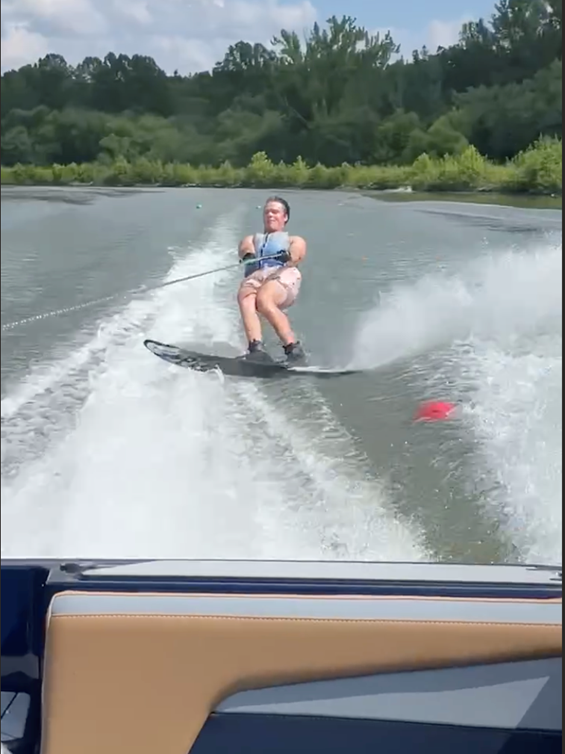
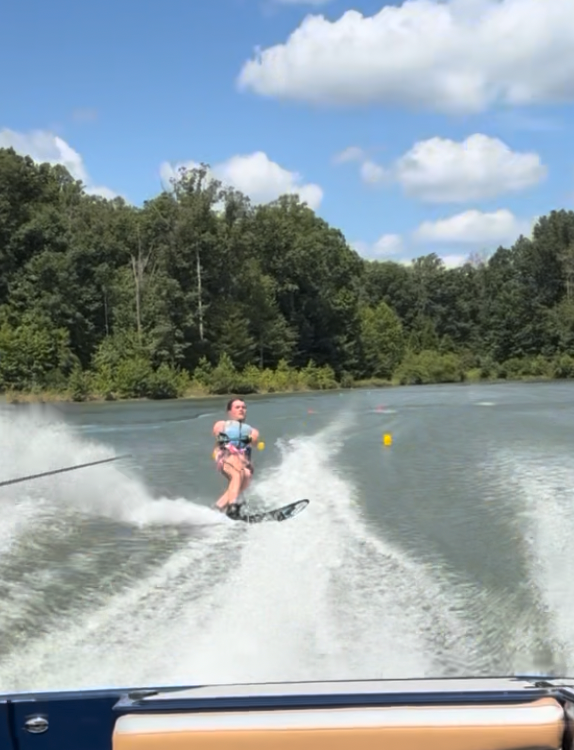

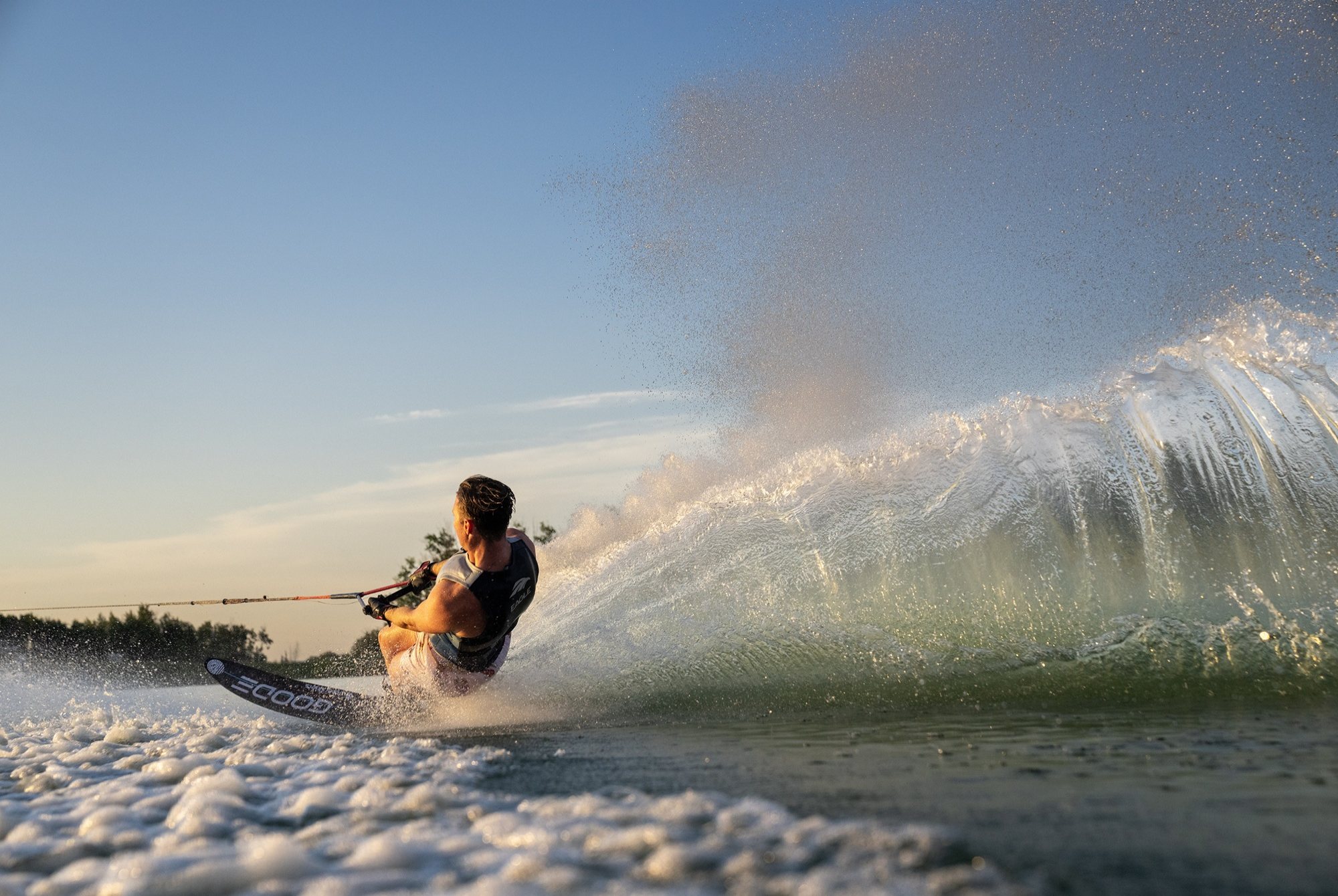
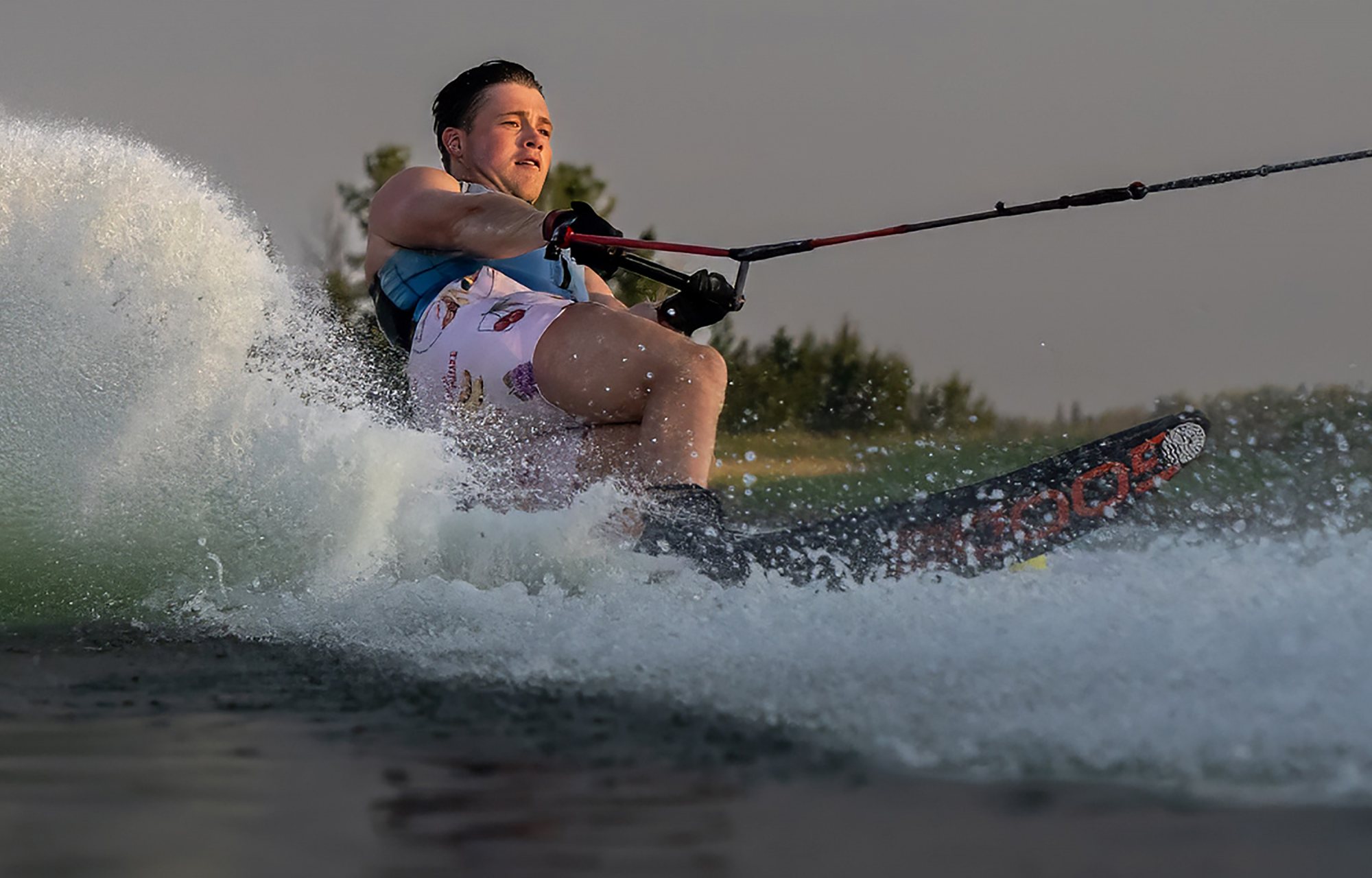
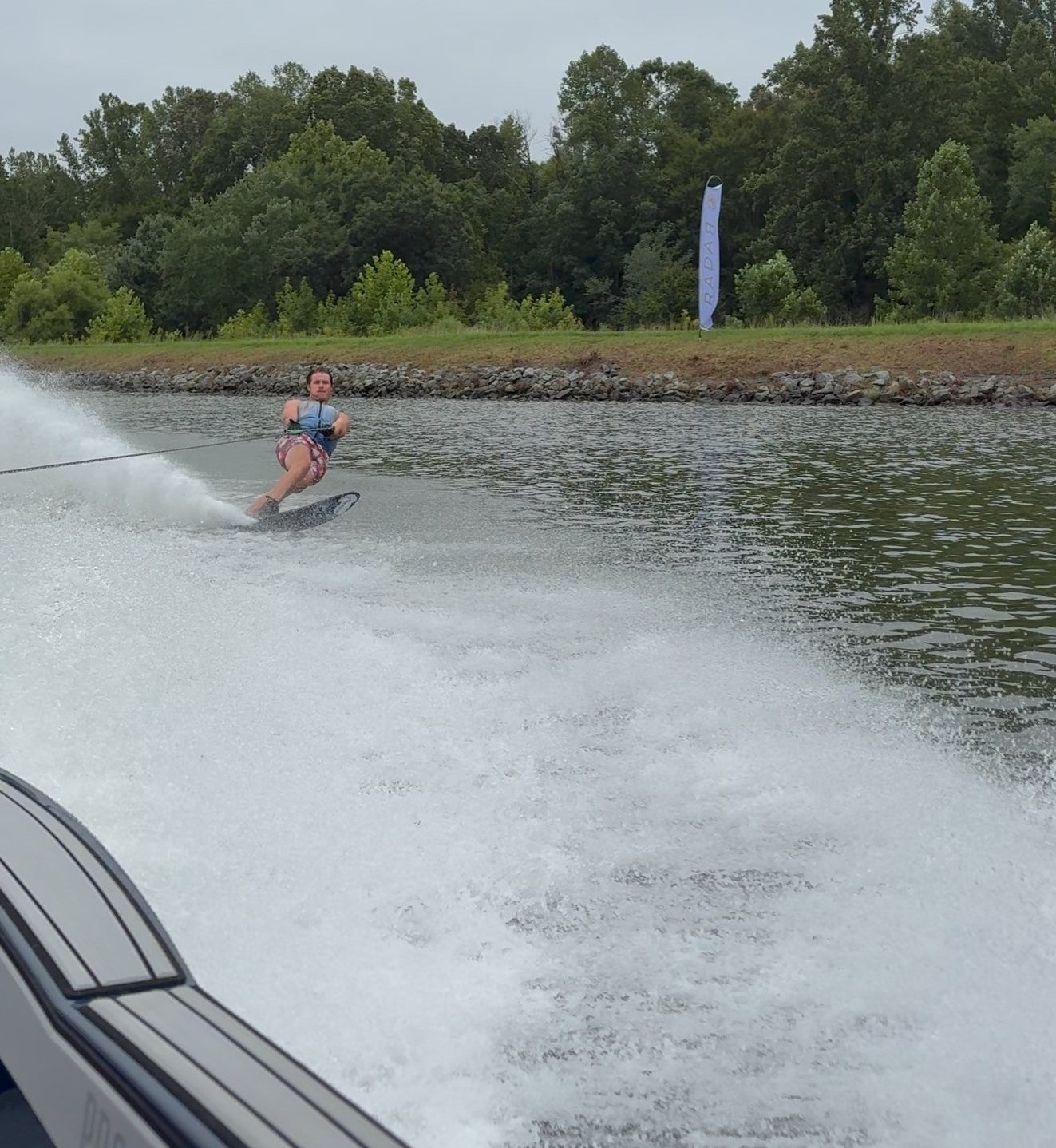
When we generate too much lean too soon, it becomes difficult to hold this lean to the wake, and the skier loses their power. The ski will hit the wake flat and can more easily disrupt your balance. If the power is applied progressively with the strongest portion of the lean being through the wakes, the ski will hit the wakes on edge, and it is much more like a knife cutting through butter. This will also allow us to avoid the jarring feeling of being “bounced” by the wakes. After crossing the second wake, maintain connection with the rope by slowly standing up, and slowly releasing the handle with one hand, as you approach your widest point or apex of the turn. Keep your chest up throughout the turn to maintain alignment, with your weight over the front foot, avoiding back foot pressure.
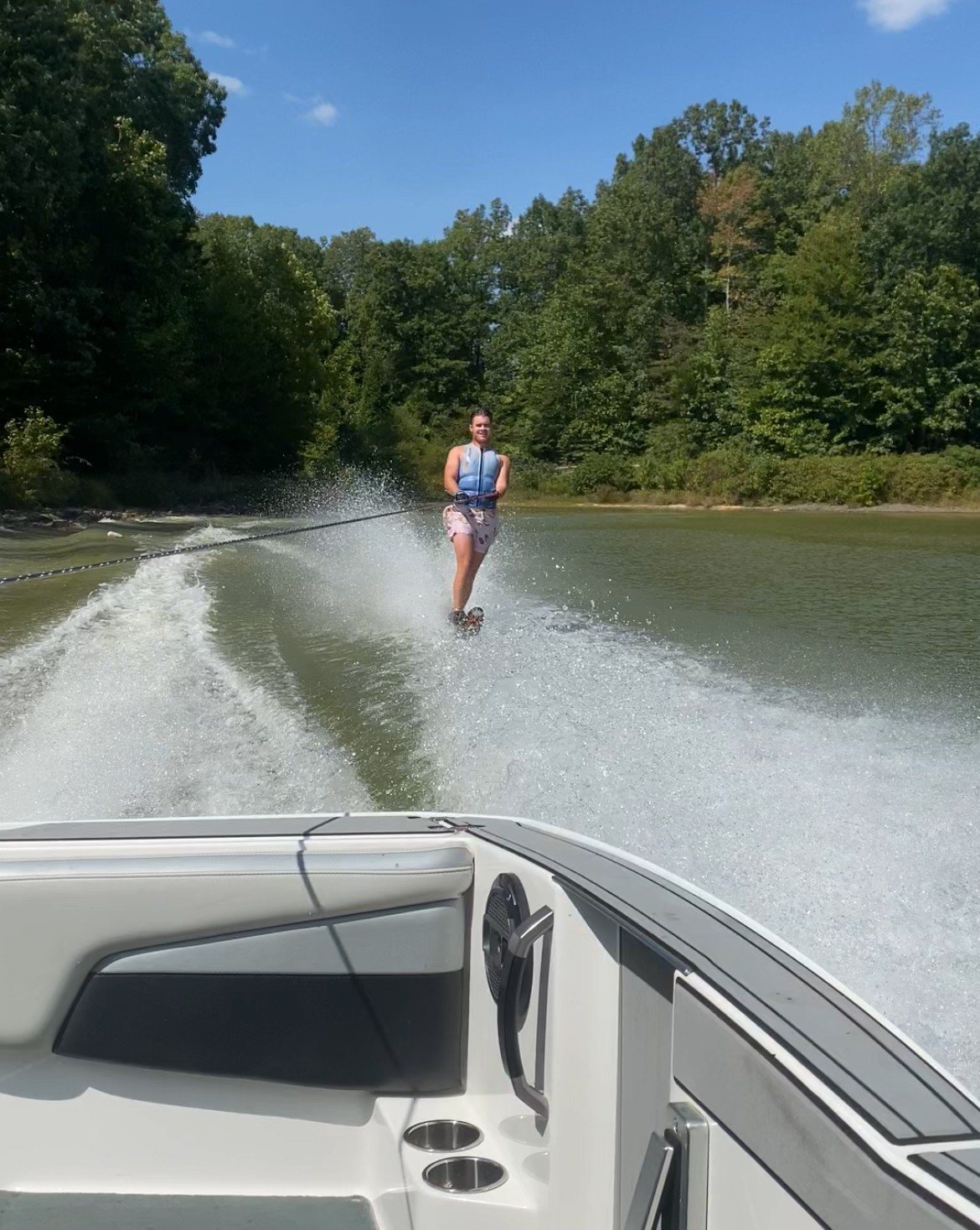
In general, it is useful to always ski proud with your chest up and hips forward, whether you are riding behind the boat passively, or actively skiing across the wakes. Regular video feedback is important as the alignment you feel does not always match the alignment you see. A picture is worth a thousand words.
Article Written by Bradley Gibbons
Shuswap Ski & Board Team Skier
Want some personalized advice?