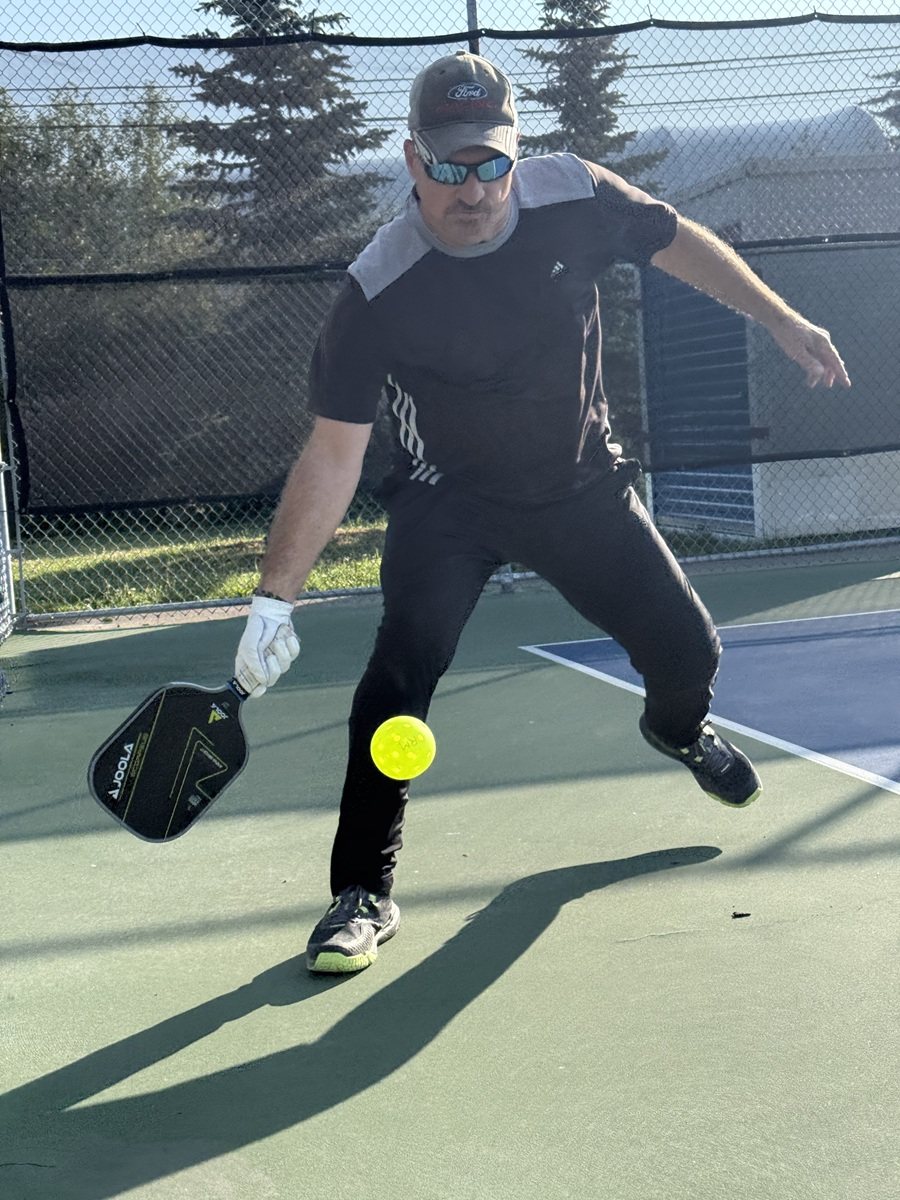
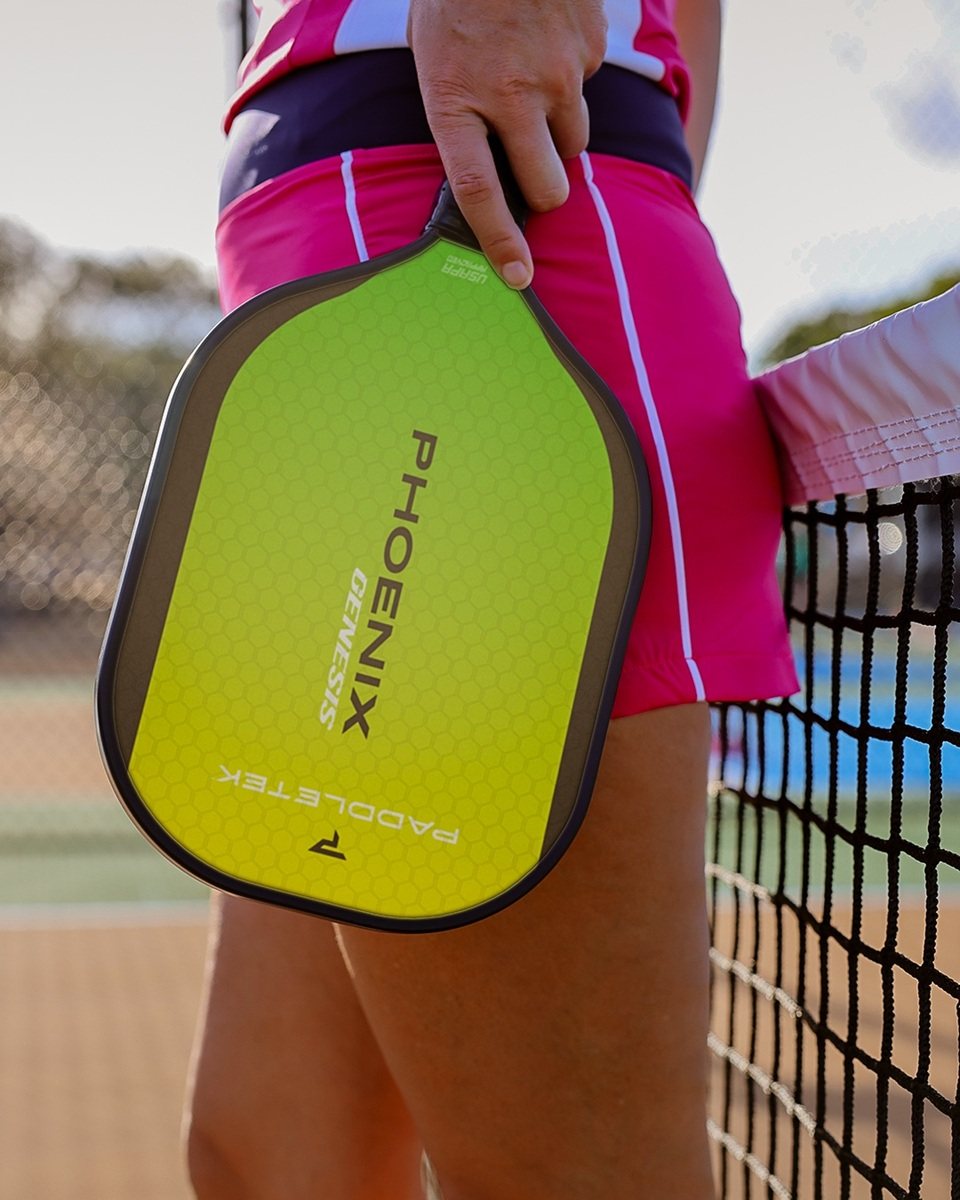
Welcome to the fastest-growing sport in North America and possibly the only pastime where “staying out of the kitchen” isn’t about dodging chores. At Shuswap Ski & Board, we’re not just your go-to experts for waterskis and surfboards… we’re also knowledgeable pickleball enthusiasts that have 30 years of experience matching people up to sports equipment they love!
This guide will serve (pun intended) as a simple intro to the big five main shots in pickleball. Oh, and don't forget to check out all the amazing pickleball gear on our site, from paddles, shoes, grips, goggles, and bags to everything in between. Because having the right gear to dominate the NVZ? That’s just smart strategy.
Here’s what I believe to be smart progression to build a complete player:
- Anticipation: Learning to read the game and common scenarios that happen regularly. Where’s the ball going next? When you do “X” what is likely to happen to “Y”?
- Positioning: Recognizing the equation of X+Y on court = Z. As in, Zat's Zee proper position to be in!!! When do you move into the best spot to hit the ball? Should you be moving forward? Or maybe you should stand your ground? What are you doing out there? Running in circles? It can sure feel like that sometimes!
- Shot Selection: Once you have a grasp of when to be moving and you get to the right places consistently, what are you going to do with the ball? Choose which shot to play.
- Mechanics: Finally, improve how you contact the ball. I think too many people spend too much time drilling the same shot over and over again to perfection but then get overwhelmed in game situations because they don’t know when to use it! I put mechanics last because I believe you need to recognize patterns and then move to the best place to react to those patterns before you even have time to choose what shot you are going to hit and how you are going to hit it.
Consistency > Creativity: You can’t regularly select a great shot if you’re facing the wrong way or standing in the wrong place too often. You will lose games. Facts.
The Big Five Pickleball Shots And What You Should Know About Them:
Dink - a soft, controlled shot hit from the NVZ (non-volley zone) that arcs over the net and lands within the opponent's NVZ. It is arguably the most important strategic shot in the game because it forces your opponents to hit the ball upwards, preventing them from smashing the ball at you and often baiting them into making an error.
- The ball should stay low over the net but don’t hit the net, it’s Andrew’s biggest pet peeve… just put the freaking ball OVER the net trying to place it where it can't be "attacked" or volleyed out of the air easily.
- A good dink lands deep enough in the kitchen or at such an angle that the opponent must wait for it to bounce and cannot easily volley it out of the air. Time is your friend, patience is a virtue! You always run into those 7 foot tall guys with 9 foot wing spans... but if you place the ball effectively you should spend more time on average attacking and less time defending.
- Dinking is a "waiting game." You dink back and forth until one player gets impatient or antsy and hits a ball too high or at a bad angle, which you then "speed up" or overhead smash. The below video is a great example of how quick and how slow the rallies can go in only a matter of seconds.
If everyone is standing at the kitchen line, at 4.0+ play, whoever hits the ball hard first usually loses the point because the other team blocks or counters it back. Dinking neutralizes the power, resets the point, and tests your opponent's footwork and focus. So don’t forget to drill the foundation of the game. You might make the local 4.0 group without dinking, but you are not getting invited to the 5.0 parties without bringing the fundamentals!
Drop - most often used as a Third Shot Drop but you need to be able to drop your fifth's, seventh's, ninth's and beyond if neccesary! A soft touch shot hit from the transition area or the baseline that lands softly in the opponent's Kitchen. While a dink is hit from NVZ to NVZ, the drop is hit from deep court to short. Its main purpose is to "drop" the ball low enough that your opponents cannot hit it downward at you, giving you and your partner time to move forward from the baseline to the Kitchen line. Have you ever played with Andrew and heard him say “Make the ball bounce!” This is what he means, a ball that bounces is generally not smash volleyed out of the air at you or your partner.
- Unlike a drive, a drop shot has a distinct "rainbow" trajectory. The goal is for the ball to be at its lowest point as it passes the net. Remember Andrew’s pet peeve… try for perfection, always! But put the freaking ball OVER not INTO the net. We would rather defend a high ball, then end the rally if given the choice.
- A good drop lands in the Non-Volley Zone (NVZ). If it lands too deep, your opponent will "punish" it with a roll volley or a drive.
- The "victory" of a drop shot isn't winning the point immediately; it’s successfully allowing you and your partner to reach the Kitchen line, neutralizing the point and beginning the cerebral cat and mouse dinking play that we all love. So stop trying for passing winners from awkward positions. Drop the ball and prepare to dink it a bit. Although sometimes you hit that perfect drop shot like in Ben John's video below and nothing can be done and it feels so good!
In high-level pickleball, the team at the net has the advantage. Always, no exceptions. If you are serving, you start at the baseline. The third shot drop is your "entry ticket" to the net. Without it, you are stuck at the back of the court while your opponent’s smash balls at your feet. Above we mentioned being at the NVZ as neutralizing the point. A good rule of thumb to consider is that if you are at the base line and your opponents are at the kitchen, you are at a disadvantage. When the roles are flipped and you are at the NVZ and they are at the baseline, now you are on advantage. With both teams up front and vying for ball placement at the kitchen, the point is neutral and we are all waiting for that high ball to snap at.
Volley - any shot hit out of the air before the ball bounces. In a sport dominated by the "short game," the volley is your primary weapon for ending points and defending your position at the Kitchen line. Because you are standing only 14 feet away from your opponents at the Non-Volley Zone (NVZ), volleys require quick reflexes and "quiet" hands.
- You want to meet the ball out in front of your body. Keeping your elbow close to your body. Reaching back or letting the ball get behind your shoulders usually leads to a weak pop-up or less than desirable return. Stay forward, stay poised, move into and through the ball generating momentum from your core.
- There is no time for a big "tennis-style" swing. And in the quick exchanges of pickleball paddle battles you want to have as short of a backswing as possible. Think of it as a short "punch" (like when you do “two for flinching” on your buddy, a controlled piston of arm movement) or a "block" rather than a full stroke. It can help people to think of their paddle like a shield. Counter hard balls back to the middle of the court and downward
- At the Kitchen line, your paddle should stay in the "Ready Position" pointed at 12 o'clock or slightly toward your backhand to react to fast shots. Stay in your athletic stance, squared up to the ball, poised like a cobra or scorpion ready to strike. (SSSSSSS..!!)
Punch Volley (Aggressive): Used when the opponent hits a chest high "watermelon"… a ball that is high enough for you to hit downward and your eyes get as big as watermelons in anticipation of cranking that ball down into your opponent’s weak spots. You "punch" through the ball toward the opponent's feet or into an open gap.
The Block Volley (Defensive): Used when an opponent "speeds up" the ball directly at your chest or face. The goal isn't to hit it hard; it’s to keep your paddle firm and use the ball’s own momentum to reset it back into their Kitchen so they can’t hit it hard at your again. Andrew likes to think of this as absorbing the ball, rather than striking at it. You want to take that balls energy from the attack and absorb it like some sort of pickleball anime character, holding it’s power for a later counter attack. It’s weird, but it works for him. Lol.
- For the "Control Player" (Block Volleys): Thicker-core paddles (16mm+). These absorb the shock of a hard-hit ball, making it easier to "reset" a fast volley into a soft dink and “place” the ball effectively. Try out the Head Gravity for an excellent defensive weapon.
The Swinging Volley (Power): Used when you have a very high ball or are hitting from the baseline and have plenty of time. This looks more like a traditional tennis stroke and is designed to "put the ball away" for a winner. Just remember what I said above, passing shots DO NOT work very well in high level doubles play. Andrew typically opts to crank the ball through his opponent’s middle, trying to elicit paddle clacking or a pop up for a second follow up smash or roll volley. If not the middle, then directly at the opponent in odd ways. No one likes a ball in the armpit or hip!
- For the "Banger" (Aggressive Volleys): A heavier paddle or one with a "Power" Gen3 style core (like the Engage Alpha PRO). These types of paddles will help put extra zip on your volleys.
Serve - the "starting gun" of the point. While it’s the only shot you have complete control over, its purpose in pickleball is different than in tennis. In tennis, the serve is a weapon; in pickleball, it’s a tool to get yourself to a neutral position (see above). Because the "Double Bounce Rule" exists (the ball must bounce once on each side before anyone can volley), the server starts at a slight disadvantage. I personally find that is easier to volley serve because you almost get to self feed yourself a stable drive that should have pace, depth and reasonably good placement. Genearlly I suggest people do the volley serve if they can, and when you get the "yips"... do a few bounce serves to shake it off.
- The ball is hit in an underhand motion and the paddle must move in an upward arc at the time of contact.
- The ball must be hit below the waist (navel level) and the tip of the paddle must be below the wrist as you contact the ball.
- The ball must land in the cross court in the diagonal service area and clear the NVZ line (if it hits the Kitchen line on the serve, it is "out").
- You can do a Volley Serve (hitting out of the air) or a Drop/Bounce Serve (dropping the ball and hitting it after it bounces).
The #1 goal of a serve is to keep the returner deep. If you serve short, your opponent can easily run in and hit a "short-angled" return, making it harder for you to get to the net. Aim for the back 2 feet of the court as often as you can. By brushing up on the back of the ball, you create topspin. This helps the ball dive down into the court (keeping it "in") and then kick forward off the bounce, which can jam the opponent. Creating good topspin allows you to hit the ball harder and still keep it in bounds. Don't always hit it to the same spot. I like to vary the target a bit… Most players have a weaker backhand return. So that is a good choice usually. I also like the "T" (Center Line). It hits the middle, forcing the opponent to move sideways and potentially creating confusion between partners as they react to the next ball from closer positions. Bring ‘em wide, hit it thin. Bring ‘em narrow, hit it wide.
Groundstrokes - are any shots hit after the ball has bounced, typically from the baseline or mid-court. Unlike a dink (which is soft) or a volley (which is out of the air), groundstrokes are full-swing shots used for the Serve Return and the Third Shot Drive.
- Because the pickleball doesn't "jump" off the ground like a tennis ball, you have to get low and swing from low-to-high to create clearance over the net. Brushing up on the ball creating top spin that helps to dip your ball.
- Power comes from stepping into the ball and shifting your weight forward, rather than just using your arm. How often do you see someone swing from their back foot and sky the ball? You want to transfer your weight just like other sports where you have a piece of equipment in your hand. Move forward through the momentum. Ever seen a golf swing or hockey puck slap shot? It’s not like that. But there are similarities in transferring the weight from your hips back to front and Chubbs had that one right for sure. It's all in the hips.
- While the swing is larger than a volley, it is still shorter than a tennis stroke to ensure you can recover quickly for the next shot. You want to remain compact with a short back swing that is ready to counter the next quick shot that could be coming from only 14 feet away.
Footwork - your paddle lets you hit the ball, but your footwork determines if you’re actually in a position to hit a good shot (refer to #2 above of the smart progression of a player). Because the court is smaller than tennis, movements are shorter and require constant adjustment. Another rule of thumb I like to use regarding my own feet, is to never be moving when my opponent is hitting the ball. Pickleball isn’t just about hands… your feet matter too!
-
Split step before every shot - a small, hop-like movement where you land on the balls of your feet just as your opponent is making contact with the ball. Your feet are slightly wider than shoulder-width, knees bent, weight on the balls of your feet. It "loads" your muscles like a poised cobra or scorpion… (SSSSSS!!!), allowing you to explode in any direction. If you are still running when they hit the ball, you won't be able to change direction quickly. So hit the ball, move to the correct position fast, split step, buckle up and get ready to block/counter.
-
Shuffle step at the NVZ - you almost never "run" side-to-side. Instead, you shuffle. Crab walk your way laterally while keeping your chest and paddle facing the net. Think of it as "Step, Slide, Step." And prepare to wear some shoes out.
Footwork and footwear go hand-in-hand (foot in foot?). Shuswap Ski & Board stocks a shoe selection that isn’t just stylish, it’s built for support, grip, and agility. Your regular runners are made to RUN forward, do your knees a favour and get a proper pair of shoes with reinforced sidewalls built for lateral movements. Seriously, even if you don’t buy them here, wear the proper shoes for less fatigue and better connection to the court. A good pair of court shoes can prevent "ankle rolls" during heavy shuffling and split-stepping. A proper court shoe provides the "grip" needed to stop instantly for a split step without sliding on the court surface. Court shoes are flatter than runners, keeping the player's center of gravity lower for better balance during dinks.
Curious about what paddle suits your game? We’ve got a whole guide for that here!
Shuswap Ski & Board carries all the top brands like Joola, Paddletek, Six Zero, Head, and Engage, with paddles that match every style and budget.
Whether you’re serving up a lesson or playing to win, remember be safe, be kind, and get a little better every day. And if you want to play better, gear up smarter. @shuswapsnb our staff doesn’t just sell gear - we live and breathe pickleball. We’ll help you choose equipment that suits your skill level, style of play, and even your budget! If you’re ready to level up your game, start with the right gear and expert advice from the crew at Shuswap Ski & Board
Because better play starts with better equipment… and a lot of dinking!
.jpg)