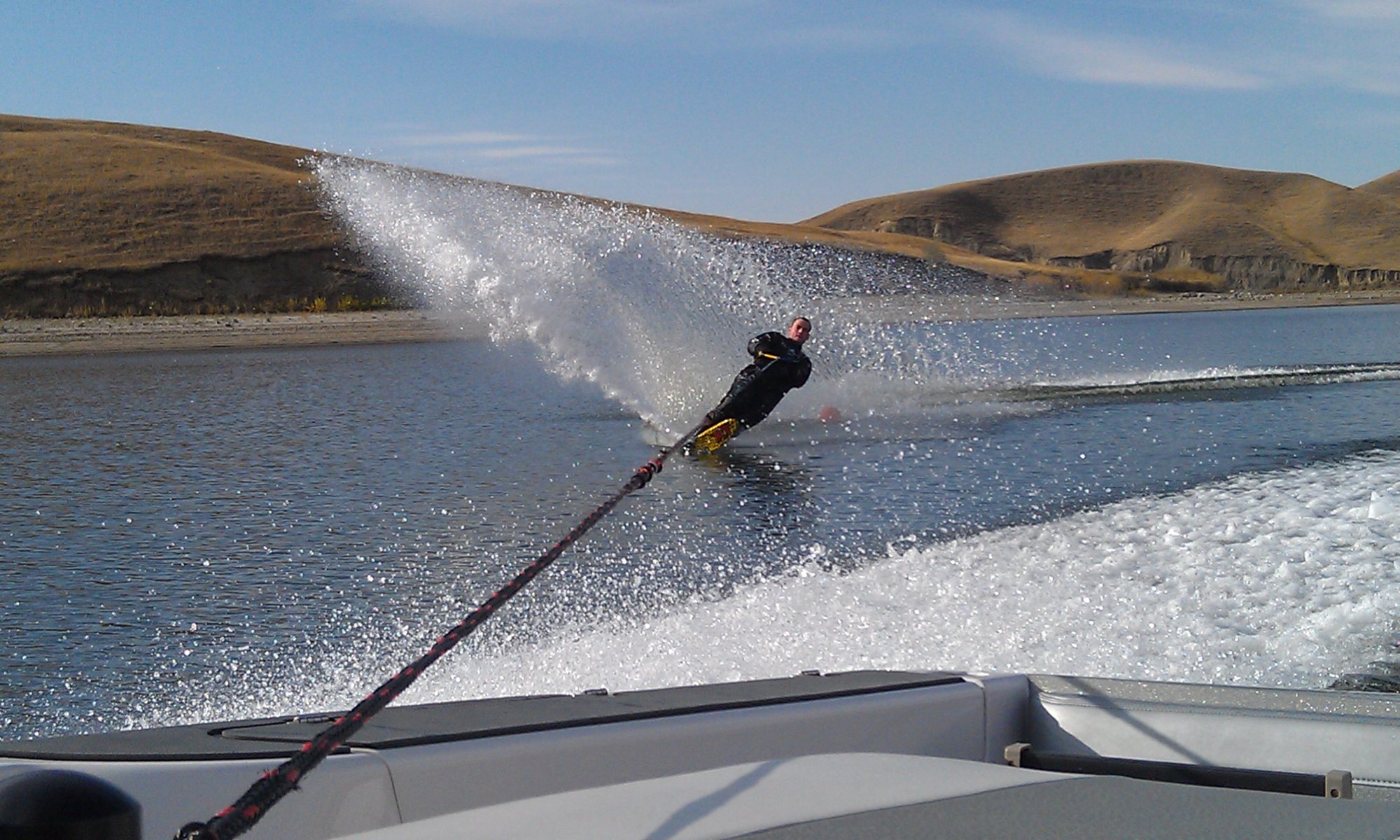
When the seasons change and temperatures drop, water skiers face a new set of challenges. Cold water simply doesn’t ski the same as warm water – fact! If you’ve ever noticed your buoy count drop when fall hits, you’re not imagining it. Here's why it happens and what adjustments you can make to your ski setup to keep your performance up when the water gets down.
Warm water gives your ski more lift and freedom, letting your ski cast out wider and earlier before each buoy. This early setup gives you more time and space for balanced turns - fewer falls, more buoys. As the temperature dips, the ski starts to ride differently: it feels like it “sucks behind you,” making it harder to stay wide and balanced through the turn
Here’s a few fin setting adjustment suggestions for you to play around with in the cold water.
Move the Fin Back. Why? It reduces tail slippage and keeps the ski more in front of you before the turn. This benefits you with a more balanced entry into the buoy, helping you avoid falling off the ski’s tail. To do this you should decrease DFT (Distance from Tail) by 0.003 inches per 10°F drop in water temperature.
Make the Fin Deeper. Why? Cold water lifts the ski more, making it unstable. More fin depth adds back control and support. This benefits you by boosting width and direction through the pre-turn. A deeper fin gives a flatter ski and more speed into the buoy. To do this you need to add 0.002 inches of depth per 10°F drop.
Generally, it is suggested to leave your bindings alone! You do not want to go too far forward or back on the ski with a poor stance. But if you need to do this… Move your bindings back! Why? It will keep more ski out of the water before the turn. This Benefits you but adding space before the buoy and enhancing your ability to finish turns smoothly.
Reduce Wing Angle Why? More wing angle pulls the tip into the water. Less wing delays the pre-turn and helps keep width. Do this by reducing 1° of wing angle per 20°F drop in water temperature. Check out other posts in this blog for fin settings on Radar, HO, O’Brien, KD, Connelly, D3 and more skis.
Reduce Fin Length Why? Less length allows the ski to travel farther and turn tighter. Only reduce your fin length in major temperature swings if you are used to staying in one spot with your fin length. (e.g., 88°F to 63°F). A 0.005-inch reduction in fin length can help.
Setup changes are just one part of the equation. Be sure that you are also emphasizing proper technique on the water. Be sure you are holding your edge through the second wake. This helps maintain direction and edge angle for a cleaner, wider turn.
Try to stay connected at the buoy for a little longer. Focus on your “power triangle” and keep your connection through the edge change.
Remember to be strong and intentional. Waterskiing is a powerful sport, and your glide speed drops faster in cold water, so stay strong with loaded aggression in your movements.
Try to adjust expectations! You won’t be as early to the buoy as you are in warmer water. A few feet late is okay, adapt your timing. You have more time than you think! Cold water doesn’t mean bad skiing. With thoughtful adjustments and a mindset geared for change, you can still run your best sets even as temperatures drop. Use some of these suggestions as a starting point and experiment to find what works best for your ski, body, and conditions.
Stay warm, ski smart, and have fun on the water!!!